28.7.26
Prebiotics vs Probiotics vs Postbiotics for Dogs: What’s the Difference?

Prebiotics vs Probiotics vs Postbiotics for Dogs: What’s the Difference?
Understanding the difference between prebiotics and probiotics for dogs, as well as the emerging role of postbiotics, can feel confusing. Although they sound similar, each plays a different role in helping maintain your dog’s gut microbiome, digestion and overall wellbeing.
With so much information available, it’s easy to wonder which one your dog actually needs. The answer is that they aren’t competing ingredients—they work together to support a balanced gut microbiome.
In this guide, we’ll explain the differences between prebiotics, probiotics and postbiotics, how each one works, and when your dog may benefit from additional digestive support.
At a Glance: How Prebiotics and Probiotics for Dogs Work with Postbiotics
Prebiotics
Feed the beneficial bacteria already living in your dog’s gut.
Probiotics
Introduce live beneficial bacteria to help maintain a healthy gut microbiome.
Postbiotics
Are the beneficial compounds produced when probiotics ferment prebiotic fibres, helping support gut and immune health.
Why Understanding the Difference Matters
Your dog’s digestive system is home to trillions of microorganisms that make up what’s known as the gut microbiome. This diverse community of beneficial bacteria plays an important role in far more than digestion—it also supports nutrient absorption, immune function and overall wellbeing.
In fact, around 70% of your dog’s immune system is associated with the gut, making digestive health one of the foundations of lifelong wellness.
As research into the canine microbiome continues to grow, ingredients such as prebiotics, probiotics and postbiotics are receiving increasing attention. While they each support gut health in different ways, they work best as part of the same system rather than in isolation.
Understanding how they work together can help you make more informed decisions about your dog’s nutrition and choose products that support their individual needs.
Learn more about pet nutrition from the World Small Animal Veterinary Association (WSAVA) Nutrition Toolkit.
Prebiotics for Dogs: What Are They?
Prebiotics are specialised fibres that feed the beneficial bacteria already living in your dog’s digestive tract.
Unlike other nutrients, prebiotics aren’t broken down by your dog’s digestive system. Instead, they travel through the gut where they become food for beneficial bacteria, helping them grow and thrive.
Think of prebiotics as fertiliser for your dog’s gut microbiome. Without a regular food source, beneficial bacteria may struggle to flourish.
Common sources of prebiotics include:
- Mannan oligosaccharides (MOS)
- Fructooligosaccharides (FOS)
- Inulin
- Chicory root
- Certain yeast-derived fibres
Prebiotics may help support:
- A balanced gut microbiome
- Healthy digestion
- Nutrient absorption
- Immune health
- Healthy stool consistency
Because they nourish the beneficial bacteria already present, prebiotics form an important part of maintaining long-term digestive health.
Probiotics for Dogs: What Are They?
Probiotics are live beneficial microorganisms that help maintain the natural balance of bacteria within your dog’s digestive system. Research into probiotics and the canine microbiome continues to grow, with studies exploring their role in supporting digestive health and maintaining a balanced gut environment.
Rather than feeding existing bacteria like prebiotics do, probiotics introduce additional beneficial bacteria into the gut.
Not all probiotics are the same. Different strains perform different functions, which is why quality probiotic supplements often contain multiple carefully selected strains.
Some of the most widely studied probiotic strains include:
- Lactobacillus rhamnosus
- Lactobacillus plantarum
- Bifidobacterium lactis
These strains have been researched for their role in supporting digestive health and maintaining a balanced gut microbiome.
Dogs may benefit from probiotic support during periods such as:
- Changes in diet
- Travel or boarding
- Following antibiotic treatment
- Stressful life events
- Temporary digestive upset
Postbiotics for Dogs: What Are They?
Postbiotics are the newest member of the gut health family and are becoming an exciting area of research in both human and animal nutrition.
Unlike probiotics, postbiotics are not live bacteria.
Instead, they are the beneficial compounds produced when probiotics ferment prebiotic fibres inside the digestive system.
These compounds include:
- Short-chain fatty acids
- Beneficial enzymes
- Organic acids
- Peptides
- Other naturally occurring metabolites
Researchers believe these naturally produced compounds help create a healthy environment within the gut and may support digestive function and immune health.
Because postbiotics don’t rely on living bacteria, they’re also considered highly stable compared with traditional probiotic organisms.
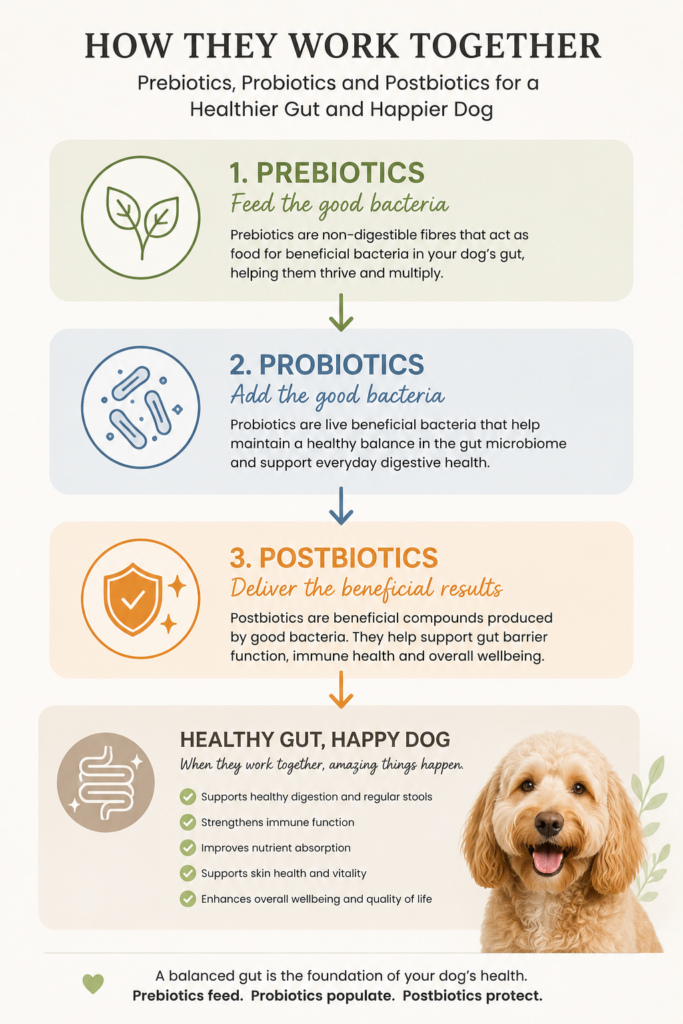
How Prebiotics, Probiotics and Postbiotics Work Together?
Rather than asking which is best, it’s more useful to think about how they work as a team.
Imagine your dog’s gut as a thriving garden.
- 🦠 Prebiotics are the fertiliser, feeding the beneficial bacteria already growing in the soil.
- 🦠 Probiotics are the healthy plants you introduce to strengthen the garden.
- 🦠 Postbiotics are the flowers and fruit produced when everything is growing well.
When all three are working together, prebiotics and probiotics for dogs help create a healthier gut environment that supports digestion, nutrient absorption and overall wellbeing.
This is why modern digestive health products increasingly focus on supporting the entire gut ecosystem rather than relying on a single ingredient.
Does Every Dog Need All Three?
Not necessarily. Many healthy dogs naturally maintain a balanced gut microbiome through a complete and balanced diet.
However, there are times when additional digestive support may be beneficial, including:
- Puppies developing their digestive system
- Senior dogs
- Dogs changing diets
- Dogs recovering from digestive upset
- Dogs experiencing stress
- Following veterinary-prescribed antibiotics
Every dog is different, so it’s always worth speaking with your veterinarian if you’re concerned about your dog’s digestive health or ongoing gastrointestinal symptoms.
Signs Your Dog’s Gut May Need Extra Support
Digestive health isn’t only about diarrhoea. A change in the gut microbiome can sometimes show up in more subtle ways.
Signs may include:
- Occasional loose stools
- Increased flatulence
- Sensitive digestion
- Reduced appetite
- Changes in stool quality
- Digestive upset after diet changes
- Increased sensitivity during stressful situations
If symptoms persist or worsen, seek veterinary advice, as these signs can also indicate underlying medical conditions.
Founder Insight
“One of the biggest misconceptions I see is that all probiotics are the same. Supporting your dog’s gut isn’t simply about adding beneficial bacteria—it’s about creating the right environment for those bacteria to thrive. That’s why I believe understanding prebiotics, probiotics and postbiotics helps dog owners make more informed choices about long-term digestive health.”
Rachael Tricarico
Founder & Certified Natural Animal Nutritionist
Supporting Your Dog’s Gut Naturally
At Houndztooth, we believe digestive health is one of the foundations of lifelong wellbeing. Our digestive support range has been developed using carefully selected ingredients designed to support a healthy gut microbiome at every life stage.
Depending on your dog’s age and individual needs, products such as the below have been formulated to support digestive health as part of a balanced diet and healthy lifestyle:
Remember, supplements are designed to complement—not replace—a complete and balanced diet.
Frequently Asked Questions
Are prebiotics better than probiotics?
Neither is better—prebiotics and probiotics for dogs perform different roles. Prebiotics feed beneficial bacteria, while probiotics introduce beneficial bacteria into the gut.
Can dogs have prebiotics and probiotics together?
Yes. They are often used together because prebiotics help nourish the beneficial bacteria supplied by probiotics.
What exactly are postbiotics?
Postbiotics are beneficial compounds naturally produced when probiotics ferment prebiotic fibres. They help support a healthy gut environment.
Does every dog need probiotics?
While every dog is different, we believe most dogs can benefit from a daily probiotic to help support a healthy gut microbiome. Just as a balanced gut is important for people, a healthy microbiome plays a key role in your dog’s digestion, nutrient absorption, immune function and overall wellbeing. Daily probiotic supplementation may be particularly beneficial for puppies, senior dogs, dogs experiencing stress or diet changes, or those with sensitive stomachs. As with any supplement, it’s important to choose a high-quality product that is appropriate for your dog’s age and individual needs.
Can puppies take probiotics?
Puppies may benefit from digestive support during weaning, diet transitions and other periods of adjustment. Choose products specifically formulated for puppies and follow the recommended feeding guidelines.
How long does it take for probiotics to work?
Every dog is different. Some owners notice changes within a few days, while others may take several weeks depending on their dog’s individual needs.
Can probiotics help dogs with diarrhoea?
Probiotics may help support normal digestive function and healthy stool consistency. If your dog has persistent diarrhoea, vomiting or other concerning symptoms, it’s important to seek veterinary advice promptly. For more information about common digestive conditions in dogs, visit the Greencross Vets Pet Library.
Can gut health affect my dog’s skin?
Emerging research suggests there is a close relationship between gut health and overall wellbeing, including skin health. A healthy gut microbiome supports normal immune function, which may also play a role in maintaining healthy skin
Can gut health affect my dog’s anxiety?
Emerging research suggests there is a close connection between the gut and the brain, often referred to as the gut-brain axis. A healthy gut microbiome may play a role in supporting normal behaviour, mood and stress responses in dogs. While gut health isn’t the sole cause of anxiety, maintaining a healthy digestive system may support your dog’s overall wellbeing. If your dog is showing ongoing signs of anxiety or behavioural changes, it’s important to seek advice from your veterinarian or a qualified behaviour professional.
Final Thoughts
Prebiotics, probiotics and postbiotics each play a unique role in supporting your dog’s digestive health, but they are most effective when viewed as part of the same system rather than separate solutions.
By understanding how prebiotics and probiotics for dogs work together, you can make more informed decisions about your dog’s nutrition and help support a healthy gut microbiome throughout every stage of life.
Whether you’re raising a growing puppy, supporting an active adult dog or caring for a senior companion, investing in digestive health is one of the simplest ways to support their overall wellbeing for years to come.
Related Articles
Looking to learn more about your dog’s gut health and overall wellbeing? Continue exploring these expert guides from Houndztooth.
Best Probiotics for Dogs in Australia: What to Look For and What Most Pet Owners Miss
Learn what makes a high-quality probiotic, which ingredients matter most, and how to choose the right probiotic for your dog’s individual needs.
Read next → Best Probiotics for Dogs in Australia: What to Look For and What Most Pet Owners Miss
Best Probiotics for Puppies in Australia
A puppy’s gut microbiome develops rapidly during the first months of life. Discover why digestive support is important during this critical stage and what to look for when choosing a probiotic for your puppy.
Read next → Best Probiotics for Puppies in Australia
What Can I Give My Dog for Gut Health?
Discover the everyday habits, foods and supplements that can help support a healthy digestive system and maintain a balanced gut microbiome.
Read next → What Can I Give My Dog for Gut Health?
10 Signs Your Dog Needs Probiotics
Could your dog’s gut be asking for extra support? Learn the common signs of an unbalanced gut microbiome and when a daily probiotic may be beneficial.
Read next → 10 Signs Your Dog Needs Probiotics