Dogs can be given probiotics, prebiotics and gut-supporting foods to help maintain a healthy digestive system. Probiotics introduce beneficial bacteria, prebiotics feed those bacteria, and postbiotics support gut lining health. Many dog owners add a dog probiotic powder, specialised probiotic for dogs, or functional foods containing probiotics for gut health to support digestive balance.
A healthy gut plays a vital role in your dog’s overall wellbeing. From digestion and nutrient absorption to immune function and behaviour, the gut microbiome influences far more than most dog owners realise.
If your dog experiences digestive upset, loose stools, food sensitivities or behavioural changes, supporting their gut health may help restore balance.
In this guide, we’ll explore the science behind the canine gut microbiome, the gut–brain axis, and the role of probiotics, prebiotics and postbiotics — along with natural ways you can support your dog’s digestive health.
What Can I Give My Dog for Gut Health?
To support your dog’s gut health, animal nutritionists commonly recommend:
Probiotics to introduce beneficial gut bacteria
Prebiotics to feed beneficial bacteria already present in the gut
Postbiotics, which are beneficial compounds produced by gut bacteria
A complete and balanced diet appropriate for your dog’s life stage
Functional foods such as a digestive meal topper containing Probiotics for gut health may also help support a healthy microbiome.
Why Gut Health Matters for Dogs
Your dog’s digestive system contains trillions of microorganisms known as the gut microbiome. These beneficial microbes help break down food, produce nutrients and support immune health.
When this microbial balance becomes disrupted — known as gut dysbiosis — dogs may develop symptoms such as:
Diarrhoea or loose stools
Gas or bloating
Poor nutrient absorption
Itchy skin or allergies
Reduced immunity
Behavioural changes
Research increasingly shows that the gut microbiome plays an important role in digestion, immune function and overall health.
Rachael, natural animal nutritionist and founder of Houndztooth, explains:
“Your dog’s gut health forms the foundation of their overall wellbeing. When the microbiome is balanced, digestion, immunity and even behaviour can improve.”
The Gut–Brain Axis: How Gut Health Can Affect Behaviour
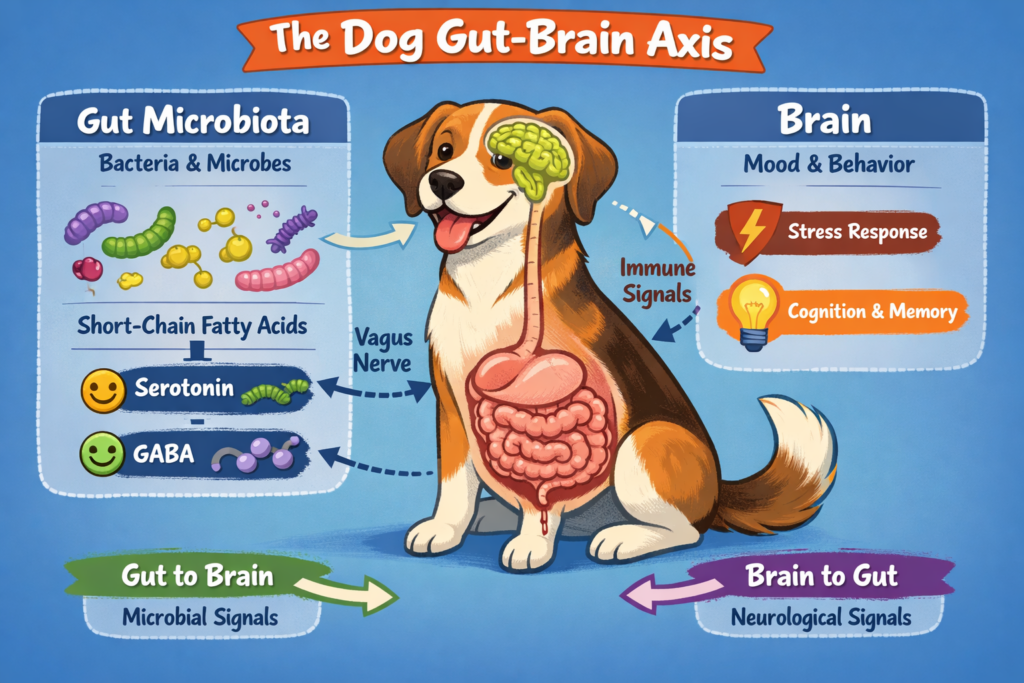
One of the most fascinating discoveries in animal health research is the gut–brain axis — a communication system linking the digestive system and the brain.
The gut microbiome communicates with the brain through nerves, hormones and immune signals.
Gut bacteria also help produce neurotransmitters such as:
Serotonin
Dopamine
GABA
These chemical messengers influence mood, stress responses and behaviour.
Rachael explains:
“Many owners don’t realise that gut health can influence behaviour. Dogs with poor gut balance may experience increased stress or irritability because the gut and brain are constantly communicating.”
Supporting digestive health may therefore help improve both physical and emotional wellbeing.
Probiotics, Prebiotics and Postbiotics: What’s the Difference?
When supporting digestive health, three important components are often discussed: probiotics, prebiotics and postbiotics.
Together they help create a healthy and balanced gut microbiome.
Probiotics
Probiotics are beneficial live bacteria that help restore balance within the gut microbiome.
They can support:
Healthy digestion
Balanced gut flora
Immune function
Improved stool quality
Recovery after antibiotic use
Adding a high-quality Dog probiotic powder can help introduce beneficial bacteria into your dog’s digestive system.
Rachael explains:
“Probiotics help replenish beneficial bacteria in the gut, which is particularly helpful during times of digestive disruption such as diet changes, stress or antibiotic use.”
Many dog owners choose a targeted Probiotic for dogs to support digestive health during these times.
Prebiotics
Prebiotics are specialised dietary fibres that feed beneficial bacteria already living in the gut.
These fibres allow beneficial microbes to grow and produce important compounds that help maintain gut balance.
Prebiotics support:
Growth of beneficial gut bacteria
Improved digestive balance
Healthy gut lining function
Rachael explains:
“Prebiotics act like fertiliser for beneficial bacteria. When combined with probiotics, they help the microbiome thrive.”
Postbiotics
Postbiotics are beneficial compounds produced by probiotic bacteria during fermentation in the gut.
These natural by-products include compounds such as short-chain fatty acids, enzymes and bioactive molecules that support gut health.
Postbiotics help support:
Gut lining integrity
Immune system function
Reduced gut inflammation
A balanced digestive environment
Rachael explains:
“When probiotics and prebiotics work together in the gut, they naturally produce postbiotics — compounds that help nourish the intestinal lining and support digestive balance.”
Together, probiotics, prebiotics and postbiotics work as a complete system to support Probiotics for gut health.
Natural Ways to Support Your Dog’s Gut Health
1. Add a Dog Probiotic Supplement
A high-quality Dog probiotic powder can help support digestive balance and replenish beneficial bacteria.
Houndztooth Puppy Probiotic is formulated to support digestive health during this critical stage.
Rachael explains:
“Supporting gut health early in life helps puppies build stronger digestive systems and more resilient immune function as they grow.”
3. Add Functional Digestive Meal Toppers
Functional foods are another convenient way to support gut health.
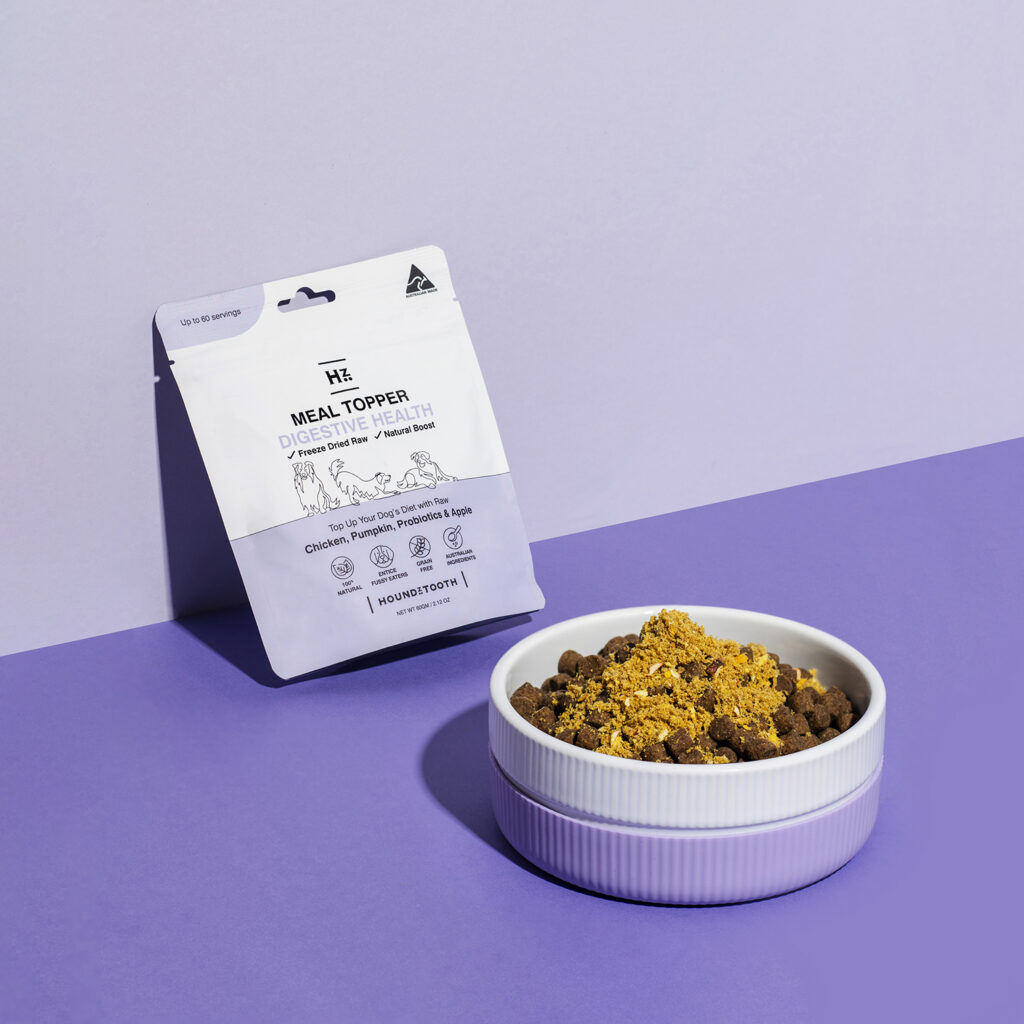
The HoundztoothDigestive Health Meal Topper contains natural ingredients that help support digestive balance and provide Probiotics for gut health.
Meal toppers can help support:
Gut microbiome diversity
Digestive balance
Nutrient absorption
Stool quality
They are also an easy way to enhance your dog’s daily diet.
Signs Your Dog May Need Gut Support
Your dog may benefit from digestive support if you notice:
Frequent diarrhoea
Loose stools
Gas or bloating
Poor appetite
Skin irritation
Behavioural changes or increased stress
If symptoms persist, always consult your veterinarian to rule out underlying medical conditions.
Supporting Your Dog’s Gut Health
Supporting your dog’s gut microbiome can improve digestion, immunity and even behaviour through the gut–brain axis.
Key strategies include:
Feeding a complete and balanced diet
Supporting beneficial bacteria with probiotics and prebiotics
Encouraging natural production of postbiotics
Adding functional digestive foods when needed
Products such as a Dog probiotic powder, targeted Probiotic for dogs, and functional foods containing Probiotics for gut health can help maintain digestive balance and support overall wellbeing.
As Rachael explains:
“When we support the gut, we’re supporting the whole body. A healthy microbiome helps dogs digest food properly, absorb nutrients and maintain long-term wellbeing.”
Frequently Asked Questions About Dog Gut Health
What is the best probiotic for dogs?
The best probiotic for dogs contains beneficial bacteria that support digestion, gut balance and immune health. Many dog owners choose a Dog probiotic powder that can easily be added to meals.
Can probiotics help dogs with diarrhoea?
Probiotics may help restore balance to the gut microbiome and improve stool consistency in dogs experiencing digestive upset caused by stress, diet changes or antibiotics.
How long does it take probiotics to work in dogs?
Some dogs may show digestive improvements within 3–7 days, while full microbiome balance may take several weeks of consistent supplementation.
Are probiotics safe for puppies?
Yes. A specially formulated Probiotic for dogs designed for puppies can support healthy digestive and immune system development.
Do dogs need prebiotics and postbiotics as well as probiotics?
Yes. Prebiotics feed beneficial bacteria in the gut, while postbiotics are beneficial compounds produced by those bacteria. Together they support effective Probiotics for gut health and a balanced microbiome.
About the Author
Rachael is a natural animal nutritionist and founder of Houndztooth. She studied natural animal nutrition at the College of Integrative Veterinary Therapies and has many years of experience working in Australia’s pet industry. Her work focuses on supporting dogs through nutrition, functional ingredients and evidence-based supplementation.
When you purchase a subscription you will receive repeat deliveries at the advertised discounted price. The deliveries are based on the subscription duration and frequency that you select.
Subscription terms equate to 2 or more purchases over the selected period of time.
Your payment details will be stored securely and you will be charged for each of these deliveries.
Some subscriptions may auto-renew at the end of their duration. If you don’t want to renew a subscription you can cancel it.
If you want to change or cancel your subscription, you can do it at any time. Your order confirmation emails have links to your Houndztooth account. You can manage your subscription from there.
See our returns policy for more details on refunds and returns.