
24.8.26
Can Gut Health Affect Your Dog’s Anxiety? The Gut-Brain Axis Explained
By Rachael Tricarico
Founder of Houndztooth & Certified Natural Animal Nutritionist (CIVT)

Can gut health affect anxiety in dogs? It’s an emerging area of canine research that’s changing the way we think about the relationship between digestion, stress and behaviour. If your dog becomes unsettled during thunderstorms, struggles when you leave the house or seems particularly sensitive to changes in routine, you probably think about their environment and behaviour first. But researchers are increasingly looking somewhere else too: the gut.
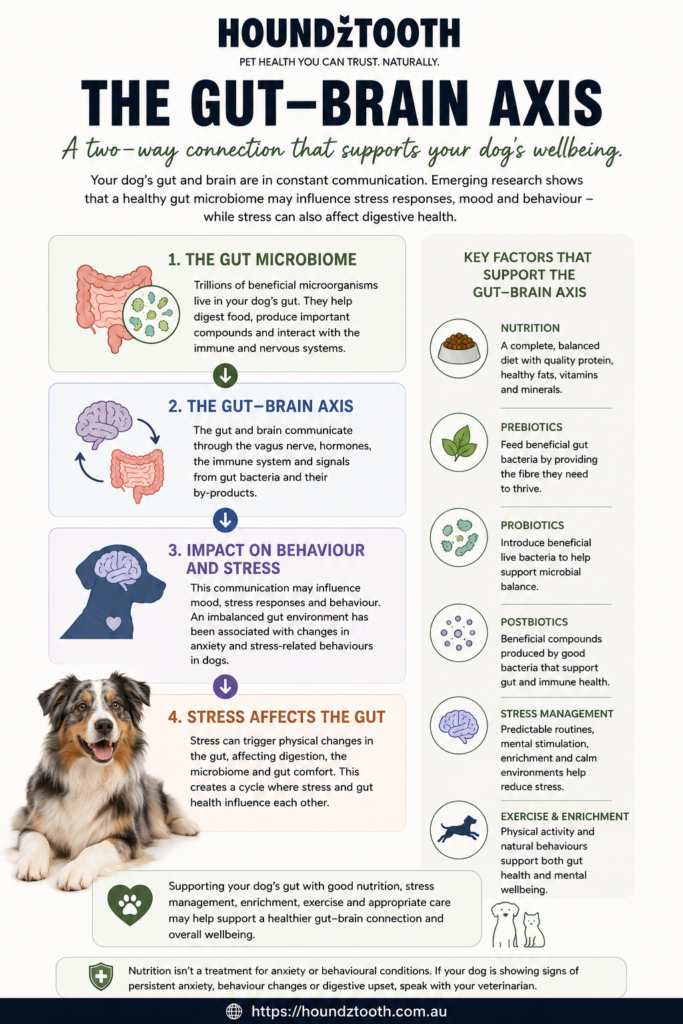
Your dog’s digestive system and brain are in constant communication through what’s known as the gut-brain axis. Emerging research suggests that the trillions of microorganisms living in the gut may play a role in this communication and potentially influence stress responses, mood and behaviour.
Does that mean poor gut health causes anxiety, or that giving your dog a probiotic will fix anxious behaviour? No. Canine anxiety is complex and can have many contributing factors. However, understanding the relationship between gut health and the brain gives us another interesting piece of the wellbeing puzzle.
At a Glance: Can Gut Health Affect Your Dog’s Anxiety?
The gut and brain communicate
This two-way communication network is known as the gut-brain axis.
The microbiome may play a role
Gut microorganisms interact with pathways involved in the body’s response to stress.
Stress can also affect the gut
This may help explain digestive changes some dogs experience during stressful periods.
Gut health is one part of wellbeing
Supporting the gut should form part of a broader approach, rather than being viewed as a treatment for anxiety.
What Is the Gut-Brain Axis in Dogs?
The gut-brain axis is the communication network connecting your dog’s gastrointestinal system with their brain and central nervous system.
Importantly, this communication travels in both directions.
The brain can influence what happens in the digestive system, while signals originating in the gut can communicate with the brain.
Several interconnected pathways are involved, including:
- the nervous system, including the vagus nerve
- the immune system
- hormones involved in the stress response
- compounds produced by gut microorganisms
- neurotransmitter-related pathways
This helps explain why gut health is increasingly being studied as part of a much broader picture of canine health and wellbeing.
What Does the Gut Microbiome Have to Do With It?
Your dog’s gastrointestinal tract contains a vast community of bacteria and other microorganisms collectively known as the gut microbiome.
A 2024 veterinary review of the gut-brain axis and canine anxiety explored how the gut microbiome may communicate with the brain through metabolic, neural, endocrine and immune pathways.
A diverse and balanced microbiome helps support normal digestion, nutrient absorption, immune function and intestinal health.
Researchers are now investigating how these microorganisms may also interact with the nervous system.
Gut bacteria produce and influence a range of compounds involved in communication throughout the body. These include short-chain fatty acids and metabolites associated with neurotransmitter pathways.
This doesn’t mean the bacteria in your dog’s gut directly determine whether they feel anxious. Rather, the microbiome appears to form part of a much larger communication network between the gut, immune system and brain.
What Does Research Tell Us About Gut Health and Anxiety in Dogs?
This is where it’s important to distinguish between what we know and what scientists are still investigating.
Research supports the existence of a gut-brain connection in dogs, and studies have identified associations between the composition of the canine gut microbiome and behaviour.
However, the evidence isn’t strong enough to say that an unbalanced gut microbiome causes anxiety in dogs or that changing the microbiome will treat an anxiety disorder.
Anxiety can be influenced by many factors, including:
- genetics
- previous experiences
- socialisation
- environment
- changes in routine
- pain or illness
- age
- individual temperament
Gut health may be another factor within this much larger picture.
For dog owners, the practical takeaway is not that anxiety begins in the gut. It’s that digestive health, behaviour and overall wellbeing aren’t necessarily completely separate systems.
Can Stress Affect Your Dog’s Gut Too?
Yes, and this is one of the most interesting aspects of the gut-brain axis.
Because communication between the gut and brain is bidirectional, emotional and environmental stress can influence gastrointestinal function.
Some dog owners will already recognise this connection.
A dog may develop loose stools before or after:
- boarding
- travelling
- a veterinary visit
- moving house
- a major change in routine
- an unfamiliar or stressful event
Stress activates physiological responses throughout the body, including hormonal and nervous-system pathways that interact with gastrointestinal function.
This is one reason supporting digestive health can be particularly relevant during periods of change or stress.
Persistent vomiting, diarrhoea, appetite changes or other gastrointestinal symptoms should always be discussed with your veterinarian rather than assumed to be caused by stress.
Where Do Prebiotics, Probiotics and Postbiotics Fit?
The growing understanding of the gut microbiome has also increased interest in nutritional strategies that support it.
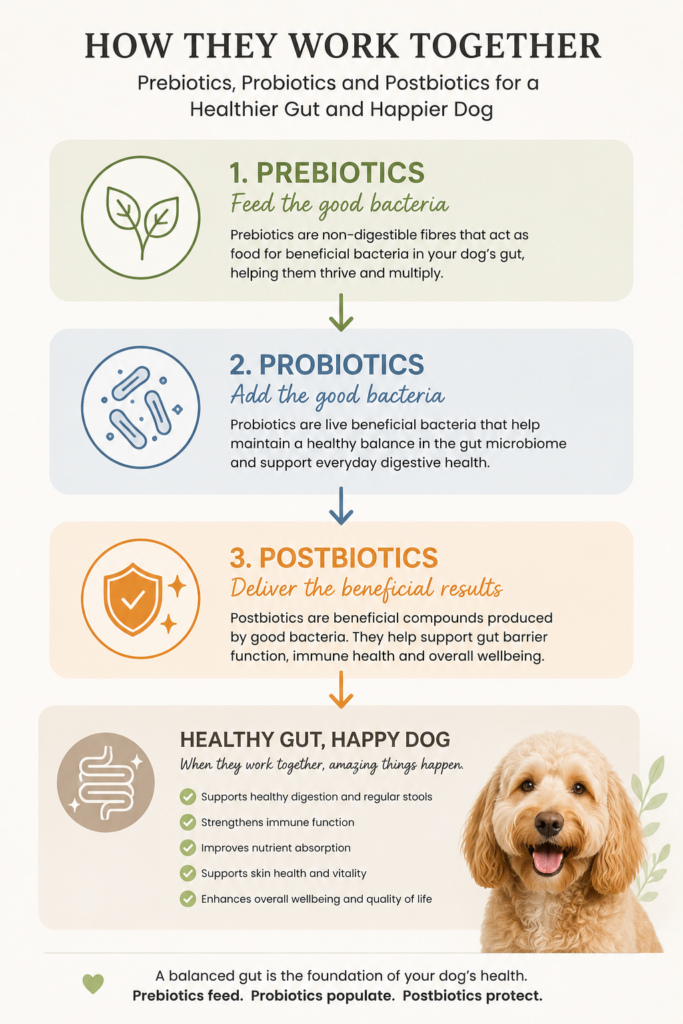
Prebiotics provide nourishment for beneficial microorganisms already living in the gut.
Probiotics introduce live beneficial microorganisms.
Postbiotics are beneficial compounds produced through microbial activity and don’t contain live microorganisms themselves.
Together, these can be used as part of a nutritional approach designed to support a healthy gut environment.
Research is investigating whether microbiome-targeted nutrition could eventually have applications beyond digestive health, including behaviour. However, canine research remains relatively limited, so probiotics shouldn’t be viewed as a treatment for anxiety.
If you’d like to understand these three components in more detail, read our guide to Prebiotics vs Probiotics vs Postbiotics for Dogs.
Supporting the Gut-Brain Connection in Your Dog
There’s no single food, supplement or routine that creates a “healthy gut-brain axis”.
Instead, think about your dog’s wellbeing as a whole.
A practical approach may include:
- feeding a complete and balanced diet appropriate for your dog’s life stage
- supporting a healthy and diverse gut microbiome
- introducing dietary changes gradually
- providing regular physical activity
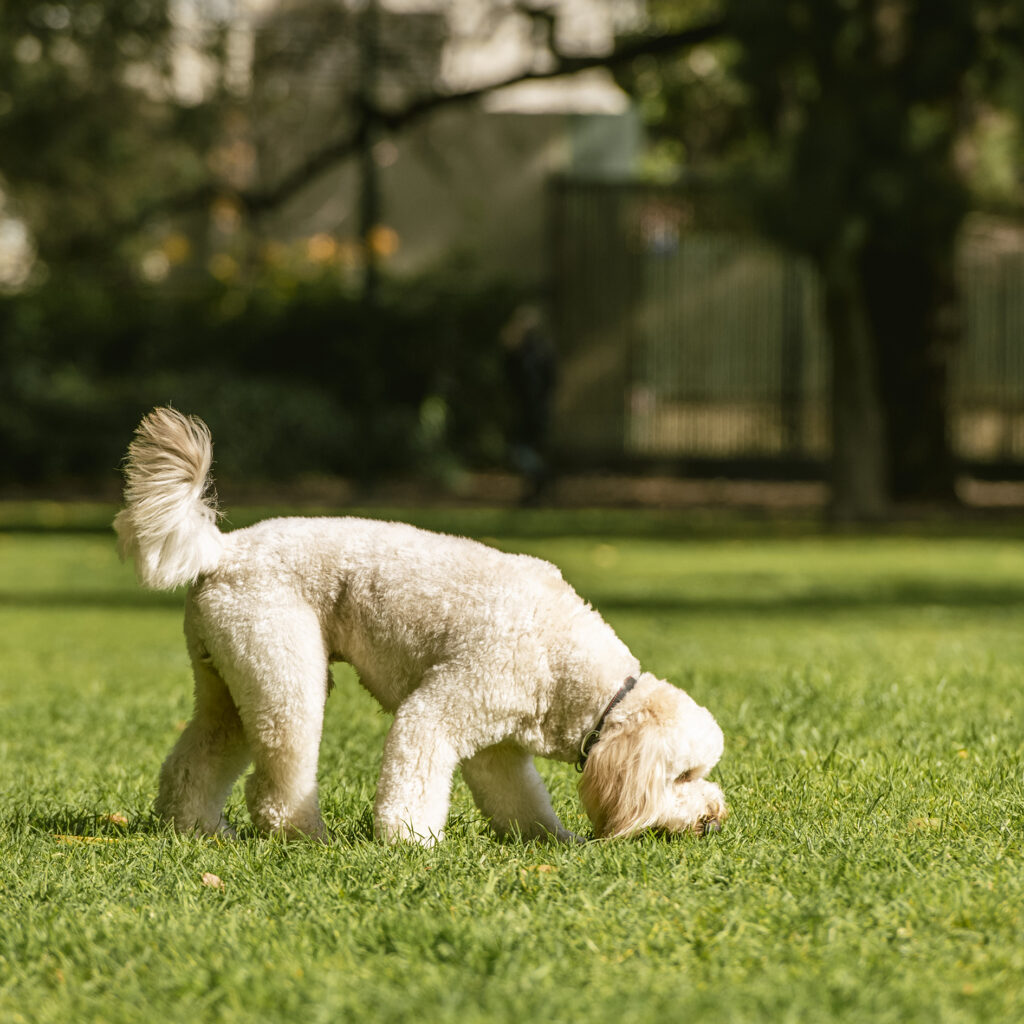
- giving your dog opportunities to sniff, explore and engage in natural behaviours
- maintaining predictable routines where possible
- providing appropriate rest and sleep
- recognising and reducing unnecessary sources of stress
- seeking professional help for persistent anxiety or behavioural changes
For dogs with sensitive digestion, maintaining consistency around food and routine may be particularly useful during stressful periods.
For more practical ways to support digestive health through diet, lifestyle and supplementation, read What Can I Give My Dog for Gut Health?
Expert Insight
“Gut health has always been about much more than what’s happening in the digestive tract. As we learn more about the microbiome, we’re beginning to understand just how interconnected different systems within the body can be. The gut-brain axis is a fascinating area of emerging canine research, but it’s important not to oversimplify it. Supporting gut health should be viewed as one part of supporting the whole dog — not as a standalone solution for anxiety.“
Rachael Tricarico
Houndztooth Founder & Certified Natural Animal Nutritionist (CIVT)
When Should You Seek Help for an Anxious Dog?
Occasional nervousness in unfamiliar situations is different from persistent anxiety that affects a dog’s everyday quality of life.
Speak with your veterinarian if your dog develops new or ongoing behavioural changes, particularly if you notice:
- persistent trembling, pacing or panting
- destructive behaviour associated with distress
- significant changes in appetite or sleep
- repeated gastrointestinal upset
- sudden changes in behaviour
- aggression or extreme fear
- difficulty coping when left alone
Behavioural changes can sometimes be associated with pain or underlying health conditions, so veterinary assessment is an important first step.
For everyday strategies that may help support a calmer dog, you can also explore our guide to Natural Calming Remedies for Anxious Dogs.
Depending on your dog’s individual situation, your veterinarian may also recommend working with a qualified veterinary behaviourist or other appropriately qualified behaviour professional.
The RSPCA Australia Knowledgebase also provides practical guidance for recognising and managing anxiety in dogs, including when to seek veterinary or behavioural support.
Frequently Asked Questions
Can poor gut health cause anxiety in dogs?
Current research doesn’t establish that poor gut health directly causes anxiety in dogs. However, the gut and brain communicate through the gut-brain axis, and emerging research suggests the gut microbiome may be associated with behaviour and stress responses. Anxiety is complex and can be influenced by genetics, environment, health and previous experiences.
Can probiotics help an anxious dog?
Probiotics are primarily used to support a healthy gut microbiome and digestive health. Researchers are investigating whether microbiome-targeted approaches may also influence behaviour through the gut-brain axis, but there isn’t currently enough canine-specific evidence to recommend probiotics as a treatment for anxiety. If you’re considering a probiotic for digestive and microbiome support, read our guide to choosing the best probiotics for dogs in Australia.
Can stress cause diarrhoea in dogs?
Stress can influence gastrointestinal function, and some dogs experience temporary changes in stool consistency during stressful situations. However, diarrhoea has many possible causes. If your dog’s diarrhoea is persistent, severe, recurrent or accompanied by other symptoms, speak with your veterinarian.
What is the gut-brain axis in dogs?
The gut-brain axis is the two-way communication network connecting the gastrointestinal system and brain. Communication occurs through neural, hormonal, immune and metabolic pathways, with the gut microbiome appearing to play an important role in this relationship.
Can a dog’s diet affect their behaviour?
Nutrition contributes to overall health and provides nutrients involved in normal brain and nervous-system function. Researchers are also investigating how diet-induced changes to the gut microbiome may relate to behaviour. However, behavioural problems are complex and shouldn’t be assumed to result from diet alone.
Should dogs take a daily probiotic?
While every dog is different, we believe most dogs can benefit from daily probiotic support to help maintain a healthy gut microbiome. Probiotics may be particularly useful during periods of dietary change, stress or digestive disruption. Choose a product appropriate for your dog’s age and individual needs, and speak with your veterinarian if your dog has an existing health condition.
Supporting Your Dog From the Inside Out
The connection between your dog’s gut and brain is an exciting and rapidly developing area of canine research. As research into gut health and anxiety in dogs continues to develop, we’re learning more about the complex relationship between the microbiome, brain, stress and behaviour.
What we know is that the gut and brain are constantly communicating and that the microbiome forms part of this complex relationship. What we don’t yet know is exactly how much changing the canine microbiome can influence anxiety and other behavioural conditions.
For now, the most responsible approach is to support your dog’s digestive health as part of their overall wellbeing, rather than viewing gut health as a treatment for anxiety.
Good nutrition, a healthy gut microbiome, appropriate exercise, enrichment, predictable routines, veterinary care and behavioural support can all contribute to helping your dog live a healthier, happier life.
Looking for nutritional support as part of your dog’s everyday calming routine? Explore Houndztooth Anxiety Aid.
Related Articles
Prebiotics vs Probiotics vs Postbiotics for Dogs
Learn the difference between these three components of gut health and how they work together to support your dog’s microbiome.
Read next: Prebiotics vs Probiotics vs Postbiotics for Dogs
Best Probiotics for Dogs in Australia
Learn what to look for when choosing a probiotic and why strains, formulation and quality matter.
Read next: Best Probiotics for Dogs in Australia
What Can I Give My Dog for Gut Health?
Explore practical ways to support your dog’s digestive health through nutrition, daily habits and targeted supplementation.
Read next: What Can I Give My Dog for Gut Health?
Natural Calming Remedies for Anxious Dogs
Explore practical ways to help support a calmer dog, including routine, exercise, enrichment and nutritional support.
Read next: Natural Calming Remedies for Anxious Dogs