
16.10.20
Tips To Help Reduce Anxiety in Rescue Dogs
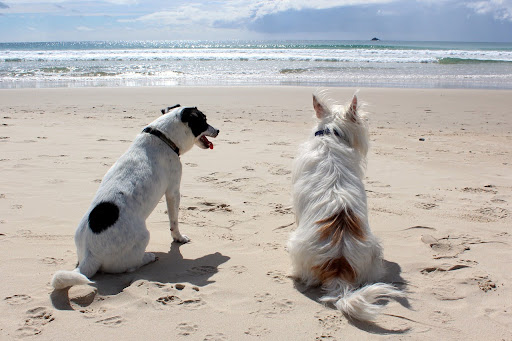
There are many wonderful abandoned dogs out there looking for new homes, and adoption provides a great feeling of giving a dog that second chance.
It’s important that prospective owners remember they are looking for a dog to be a loved member of the family that will fit well into their lifestyle and not cause issues or heartache.
No matter how cute a dog is, when choosing a rescue dog, it’s important not to let the heart rule the head. Our Founder and Natural Animal Nutritionist, Rachael shares her tips on setting up your new rescue dog for success.
Setting a rescue dog up for success
Rescue dogs can come with their own special set of behaviours, due largely to the circumstances in which they’ve been living and/or their abandonment.
These behaviours can vary in intensity and seriousness, but may include:
- Anxious behaviour
- Destructive behaviour
- Escaping
- Phobias
New owners need to understand that these behaviours may have developed because of fear and/or poor treatment. As with the more common problems, many of these problems can be solved with good management and consistent training.
An understanding owner that’s prepared to develop a trusting bond with their rescue dog will help them overcome their fears and anxieties.
However, not every person will have the skills and time to take on a rescue dog with serious behavioural problems. If you find yourself in this situation, we recommend seeking assistance from an experienced professional trainer.
Our Training tips
The key to success with a rescue dog is positive reinforcement, consistency and training. Lots of training.
Following are some simple tips to help get a rescue dog’s training off to a good start.
Names
Some dogs won’t recognise their new name given to them by the rescue centre.
We recommend your first step is to teach them their new name. Simply speaking or calling your rescue dog’s name often, and then rewarding their acknowledgement, is a good place to start.
Routine
Dogs like routine. It helps them feel secure. Establish your dog’s routine from the start. Feed them at the same time and in the same place every day.
If they’re not allowed on the furniture, then keep them off the furniture right from the beginning. Make the rules of the house clear and consistent. It will help your dog understand what’s expected of them and assist them with settling in.
Rewards
Rescue dogs maybe fearful when you first bring them home. To build their confidence, we recommend using food to your advantage. Instead of putting down a bowl full of food for them to eat in one go, use their daily ration of food for training them.
You can call their name, and then give them some food. Ask them to sit, then give them a treat, and so forth. Each time you ask them to do something, they can get a reward for doing so.
Houndztooth’s training treats are perfect for training your new rescue dog. With 100% Australian Chicken, Lamb, Beef and Ocean Trout to choose from, teaching them to settle in will be that much tastier.
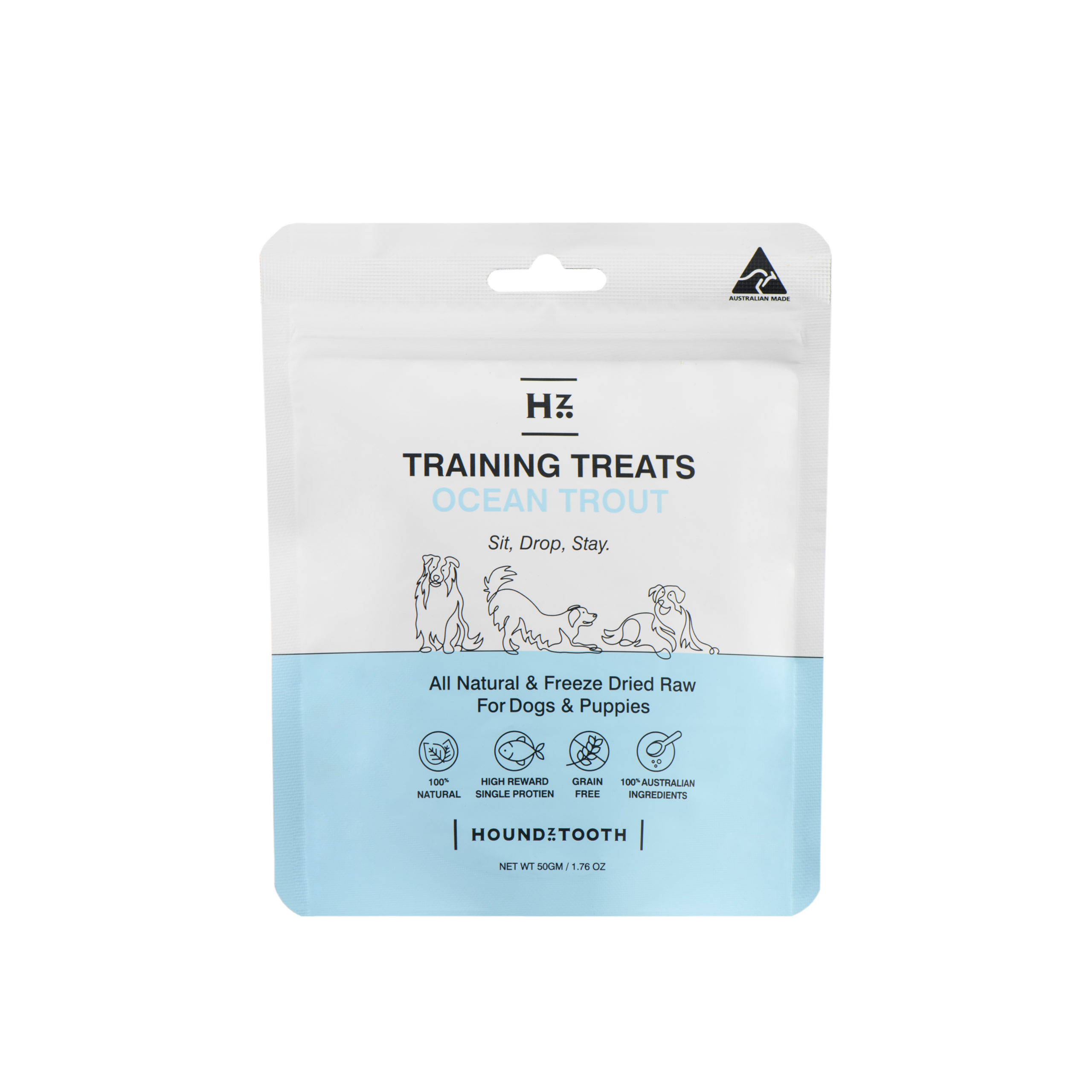
Training Treats Ocean Trout
$12
Our all natural Ocean Trout Training Treats are a healthy, high reward and bite-size treat perfect for training and rewarding (and great as toy stuffers too!).
Australian made and sourced, our all natural & freeze dried raw suitable for dogs and puppies of all sizes. A high reward and high protein treat, containing no artificial flavours, preservatives or colours.
Made from 100% Australian ocean trout, chia seed, salmon, apple, flaxseed & rosemary.
Our Training Treats are perfectly sized to easily reward your dog when training.
At Houndztooth we believe that dogs are more than just pets, they’re part of the family. Our dogs deserve only the best and that is the reason we have created our 100% natural Training Treats. A healthy and nutritious treat that your dog will love. Sourced from 100% natural Australian ingredients to promote your dog’s overall health and wellbeing.
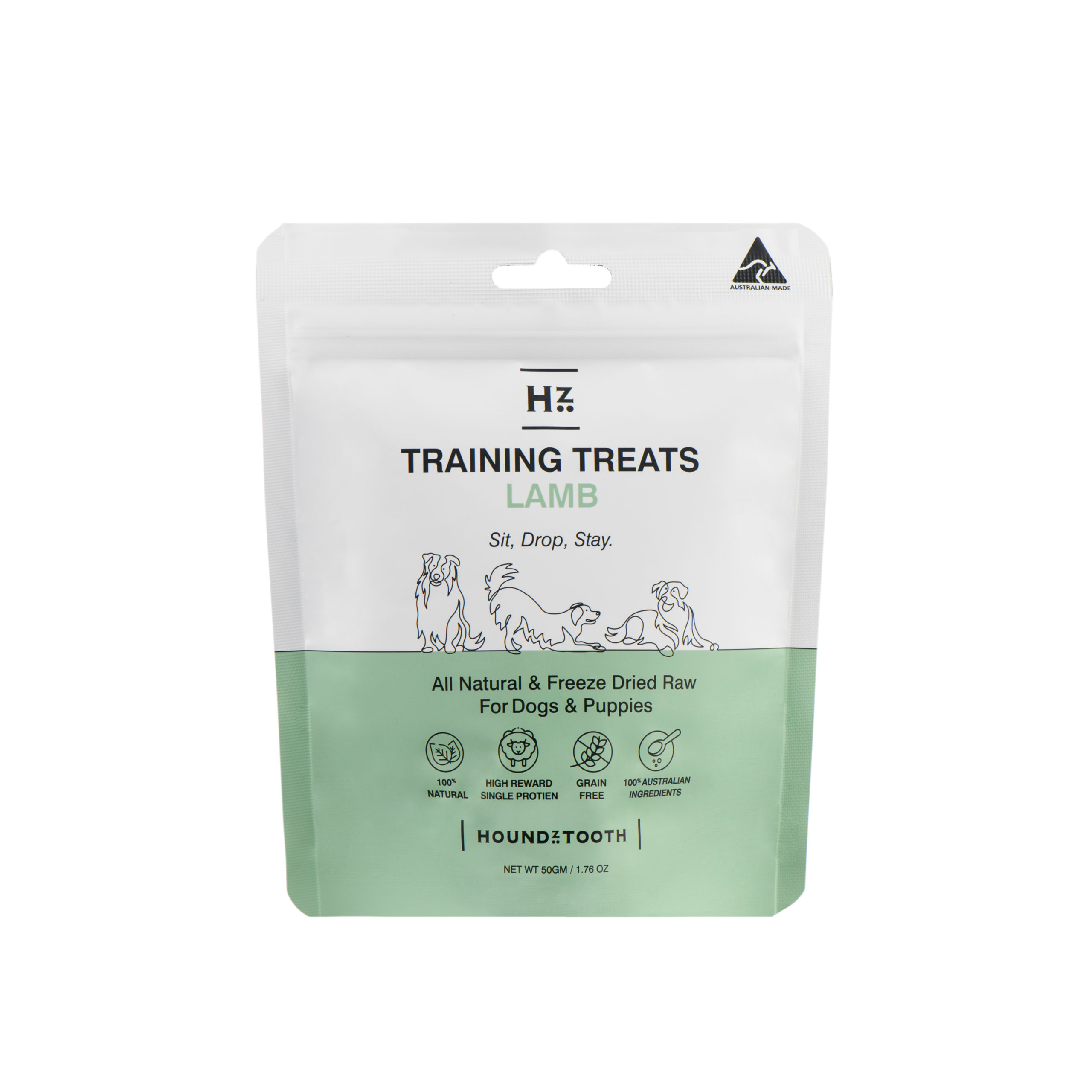
Training Treats Lamb
$12
Our all natural lamb Training Treats are a healthy, high reward and bite-size treat perfect for training and rewarding (and great as toy stuffers too!).
Australian made and sourced, our all natural & freeze dried raw suitable for dogs and puppies of all sizes. A high reward and single protein treat, containing no artificial flavours, preservatives or colours.
Made from 100% Australian lamb, sweet potato & rosemary.
Our Training Treats are perfectly sized to easily reward your dog when training.
At Houndztooth we believe that dogs are more than just pets, they’re part of the family. Our dogs deserve only the best and that is the reason we have created our 100% natural Training Treats. A healthy and nutritious treat that your dog will love. Sourced from 100% natural Australian ingredients to promote your dog’s overall health and wellbeing.
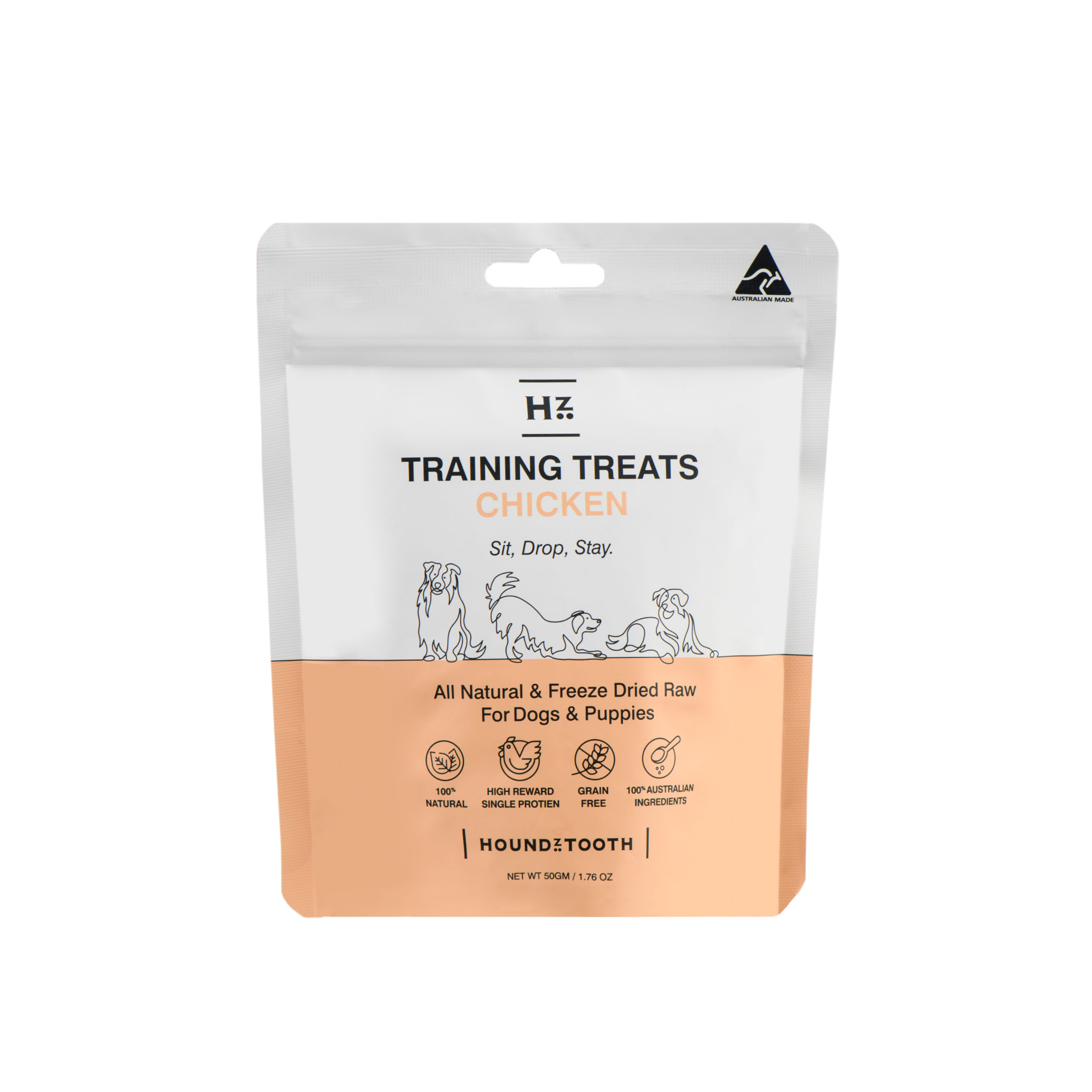
Training Treats Chicken
$200
Our all natural Chicken Training Treats are a healthy, high reward and bite-size treat perfect for training and rewarding (and great as toy stuffers too!).
Australian made and sourced, our all natural & freeze dried raw suitable for dogs and puppies of all sizes. A high reward and single protein treat, containing no artificial flavours, preservatives or colours.
Made from 100% Australian chicken, apple, kale & rosemary.
Our Training Treats are perfectly sized to easily reward your dog when training.
At Houndztooth we believe that dogs are more than just pets, they’re part of the family. Our dogs deserve only the best and that is the reason we have created our 100% natural Training Treats. A healthy and nutritious treat that your dog will love. Sourced from 100% natural Australian ingredients to promote your dog’s overall health and wellbeing.
*** We’ve released a very limited batch of our favourite Houndztooth treats in 1kg bulk value bags — perfect for multi-dog households or serious treat lovers! Available for only $200 per kg, these treats are exceptional value with a best before date of December 2025. Once they’re gone, they’re gone!
Off-leash
Be sure to keep your rescue dog in the lead for at least the first few days. You should keep them on the lead until you’ve established the following:
- They will come back when called
- They’re social with other dogs
- They’re not likely to be spooked or frightened by things going on around them
When you first let your rescue dog off the leash, you’ll need to do it in a space that is:
- Somewhere safe and quiet
- Not full of dogs or other distractions
- Somewhere they can’t easily access a road
When you first venture to the park, make sure that you always have a treat pouch full of food. Never let them step far away from you before calling them and offering a treat.
This process will help set up your dog to have a wonderful recall, where they always comes straight back to you when called in the park. Likewise, use rewards to encourage them into your car and gradually built up their confidence in car travel from short trips to longer journeys.
Socialising
Socialising your rescue dog is just like socialising a new puppy. Over time, you should carefully expose them to a wide range of different experiences to gauge how they respond.
New experiences could include bicycles, prams, busy roads, loud noises, children, and so on. You will soon develop an understanding of anything that frightens them. With this knowledge, you can develop a strategy to initially avoid the problem and eventually modify their behaviour.
Destructive behaviour
Your new dog may have a tendency to become destructive when left home alone. To help combat this, we recommend always try to give them a lot of exercise right before you go out for an extended period of time.
We suggest giving them something to chew on when you leave the house and use dog toys that dispense food to keep them entertained when you are not around.
Separation
Anxious behaviour around separation needs to be distinguished from boredom, although both can result in destructive behaviour.
Amongst other things, affected pets may follow their owners from room to room and may behave anxiously when they anticipate you are about to leave the house.
These dogs need to be rewarded for all calm behaviour and encouraged to spend time on their own when they are home. Don’t allow them to follow you around the house and avoid carrying small dogs from room to room.
Providing chew toys and food dispensing toys to keep your dog occupied can help—the actual chewing process can provide stress relief for an anxious dog. Lots of exercise can also be beneficial.
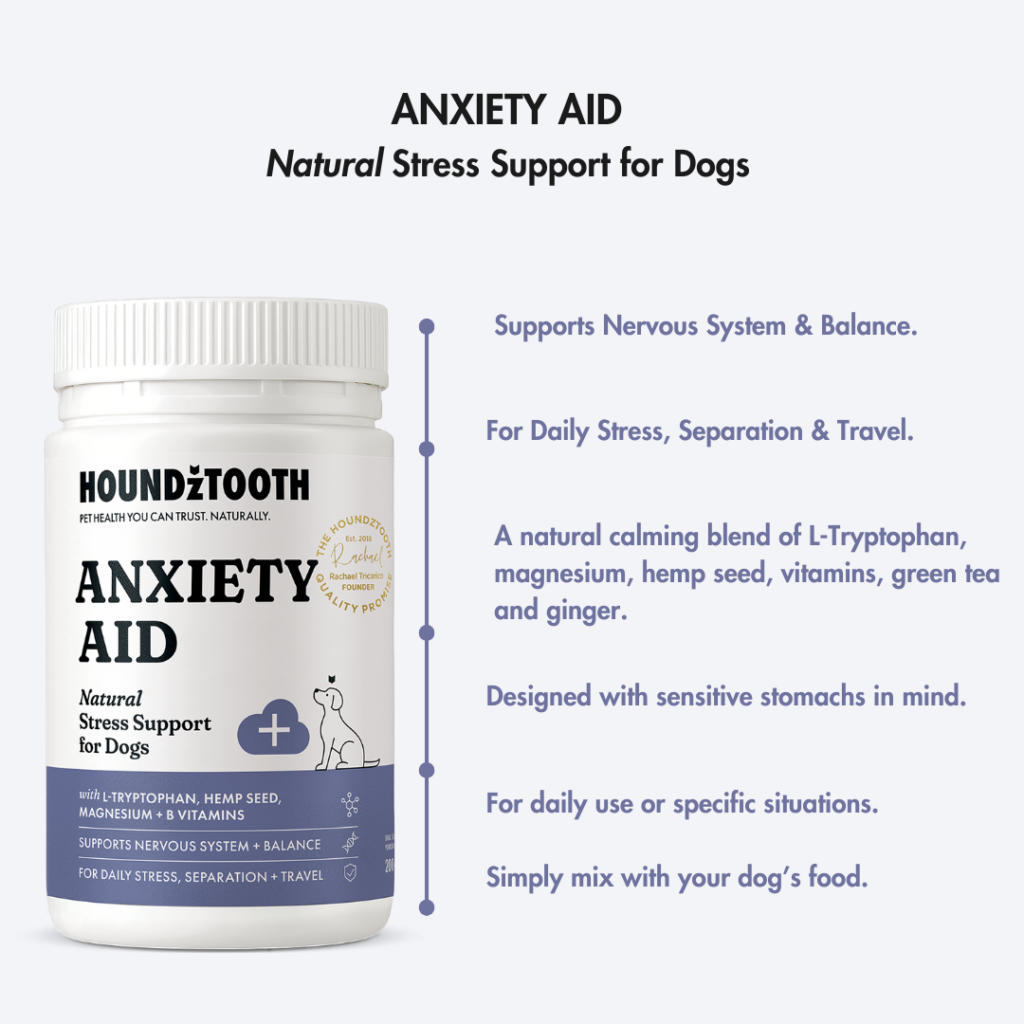
Made with Australian hemp oil for dogs, Houndztooth’s Hemp Anxiety Aid has been professionally formulated and may help ease anxiety in your dog, including any separation anxiety your new rescue dog may experience.
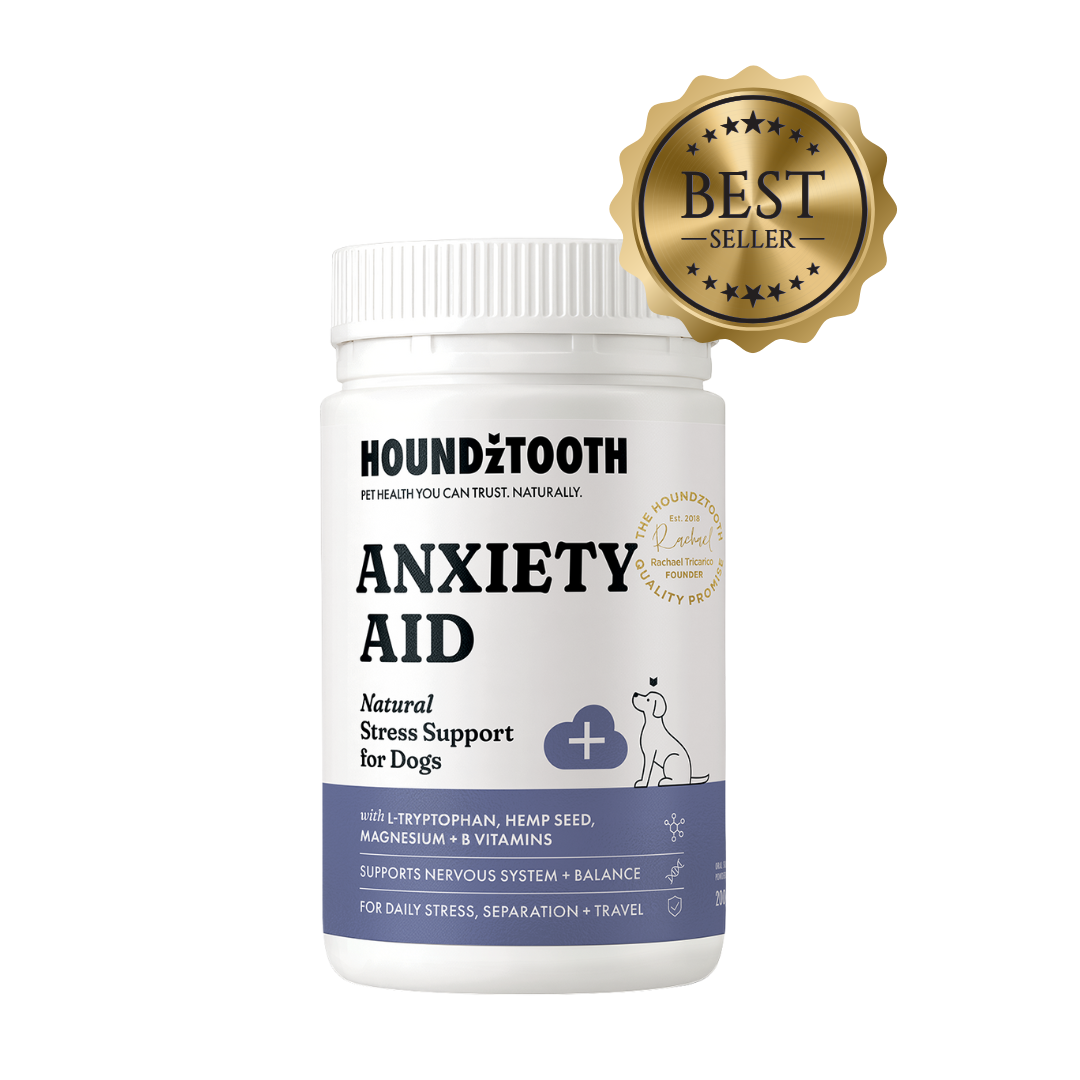
Natural Anxiety Supplement for Dogs – Anxiety Aid
$40.95
Hemp Anxiety Aid is a natural calming supplement for dogs formulated with hemp seed, L-tryptophan and magnesium to support nervous system health.
Nutritional Support for Dogs Prone to Stress and Nervous Behaviour
Dogs can experience anxiety during travel, thunderstorms, separation, or changes in routine. Houndztooth Anxiety Aid is a natural anxiety supplement for dogs formulated with hemp seed, L-Tryptophan, magnesium and B vitamins to support calm behaviour and a healthy nervous system.
Common Signs of Stress or Nervous Behaviour in Dogs
-
pacing
-
excessive barking
-
whining or trembling
-
destructive behaviour
-
separation distress
Houndztooth Anxiety Aid contains a blend of nutrients that support the nervous system:
-
Hemp seed powder – rich in omega fatty acids that support brain health
-
L-Tryptophan – supports serotonin production and calm behaviour
-
Magnesium – helps regulate nerve function
-
B Vitamins – support stress response and energy metabolism
-
travel
-
thunderstorms
- vet visits and car rides
-
changes in routine
-
separation anxiety
Rescue success
Despite a challenging start, many dogs become well-behaved member of the family.
Their rehabilitation requires experienced management and consistent training (and a lot of effort and tolerance!). The outcome cab be very rewarding for everyone, particularly your dog.