
15.9.26
Green-Lipped Mussel for Dogs: Benefits, Research and What to Look For
By Rachael Tricarico
Founder of Houndztooth & Certified Natural Animal Nutritionist (CIVT)
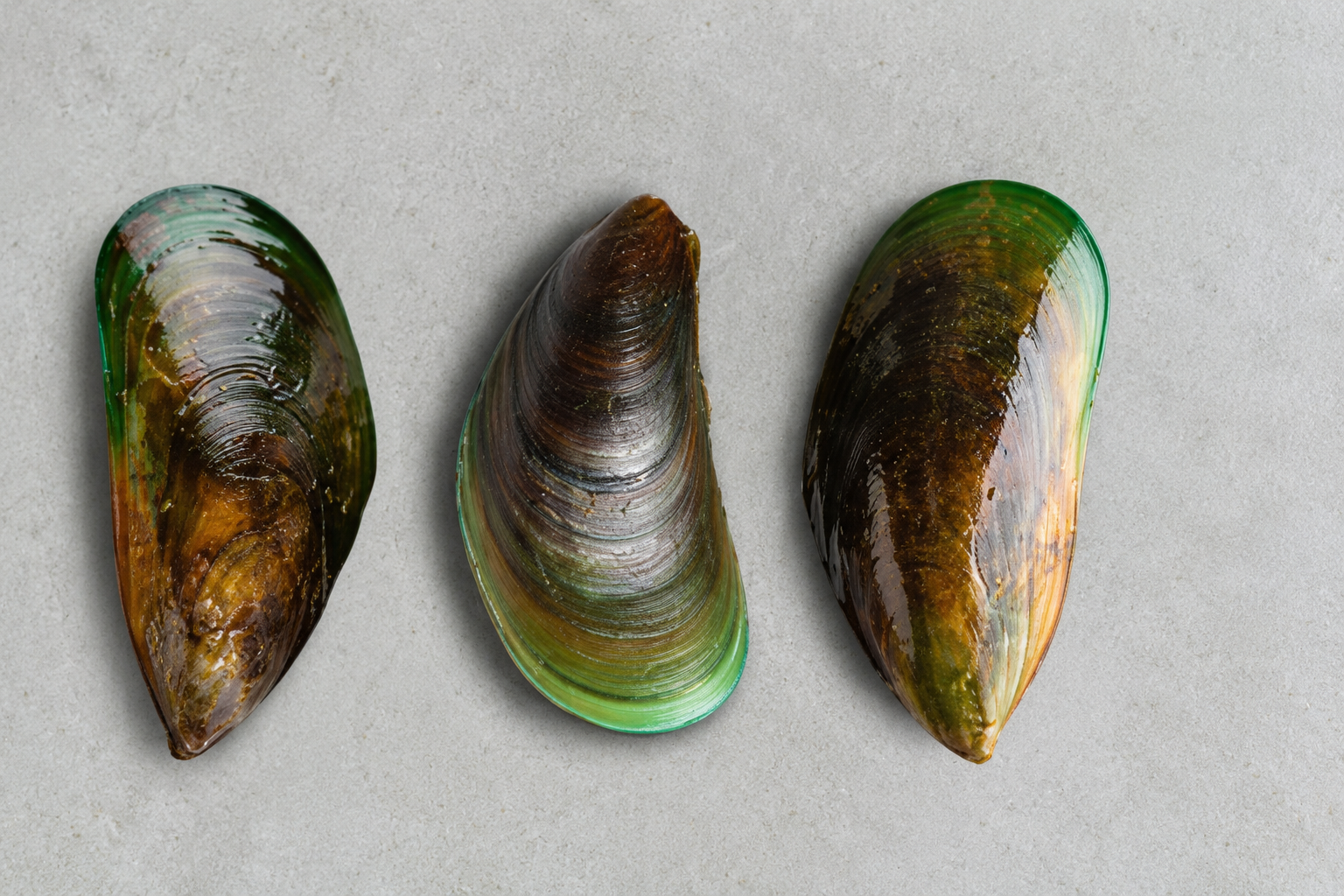
If you’ve looked at the ingredient list on a joint supplement for dogs, there’s a good chance you’ve come across New Zealand green-lipped mussel (Perna canaliculus).
Native to New Zealand, green-lipped mussel is used in many canine joint and mobility supplements. What makes it particularly interesting is that, unlike many ingredients found in pet supplements, green-lipped mussel has been investigated in several clinical studies involving dogs.
So, what exactly is New Zealand green-lipped mussel, what does the research tell us, and what should you look for when choosing a supplement for your dog?
At a Glance: Green-Lipped Mussel for Dogs
It’s native to New Zealand
Green-lipped mussel, or Perna canaliculus, is a marine mussel native to New Zealand.
It provides naturally occurring nutrients
New Zealand green-lipped mussel contains marine lipids, including the omega-3 fatty acids EPA and DHA, along with other naturally occurring compounds.
It has been studied in dogs
Several canine studies have investigated green-lipped mussel for dogs experiencing osteoarthritis, degenerative joint disease or mobility concerns.
The form and amount matter
Different studies have used different preparations and amounts, so simply seeing “green-lipped mussel” on an ingredient list doesn’t tell you everything about a supplement.
What Is New Zealand Green-Lipped Mussel?
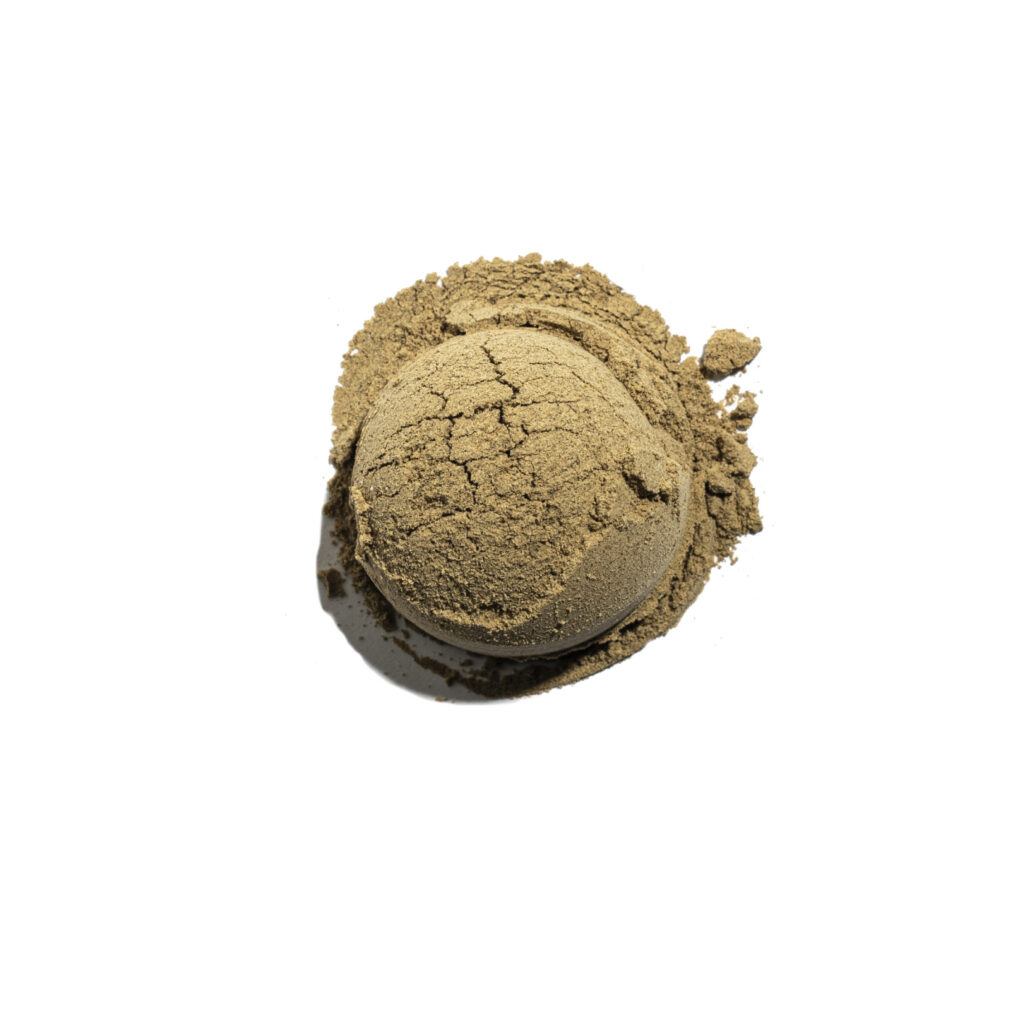
Green-lipped mussel is a shellfish species native to the coastal waters of New Zealand. Its scientific name is Perna canaliculus, and it takes its common name from the distinctive green colouring around the edge of its shell.
For nutritional supplements, New Zealand green-lipped mussel can be processed into powders, oils and concentrated extracts.
It naturally contains a range of nutrients and bioactive compounds, including marine omega-3 fatty acids such as EPA and DHA. A veterinary review also identified other lipids, carotenoids and naturally occurring compounds within the mussel.
This combination is one reason green-lipped mussel has attracted interest in both human and animal joint-health research.
What Are the Potential Benefits of Green-Lipped Mussel for Dogs?
New Zealand green-lipped mussel is most commonly used as part of nutritional support for joint health, mobility and comfort.
Rather than thinking of it as an ingredient that “treats arthritis”, it’s more useful to consider green-lipped mussel as one component of a broader approach to supporting healthy movement.
This may be particularly relevant for:
- ageing and senior dogs
- active and working dogs
- larger breeds
- dogs experiencing changes in mobility
- dogs whose overall joint-health plan includes nutritional supplementation.
Changes in your dog’s movement shouldn’t automatically be attributed to ageing. New or persistent stiffness, lameness or reluctance to move should be discussed with your veterinarian.
What Does the Research Say About Green-Lipped Mussel for Dogs?
This is where New Zealand green-lipped mussel becomes particularly interesting.
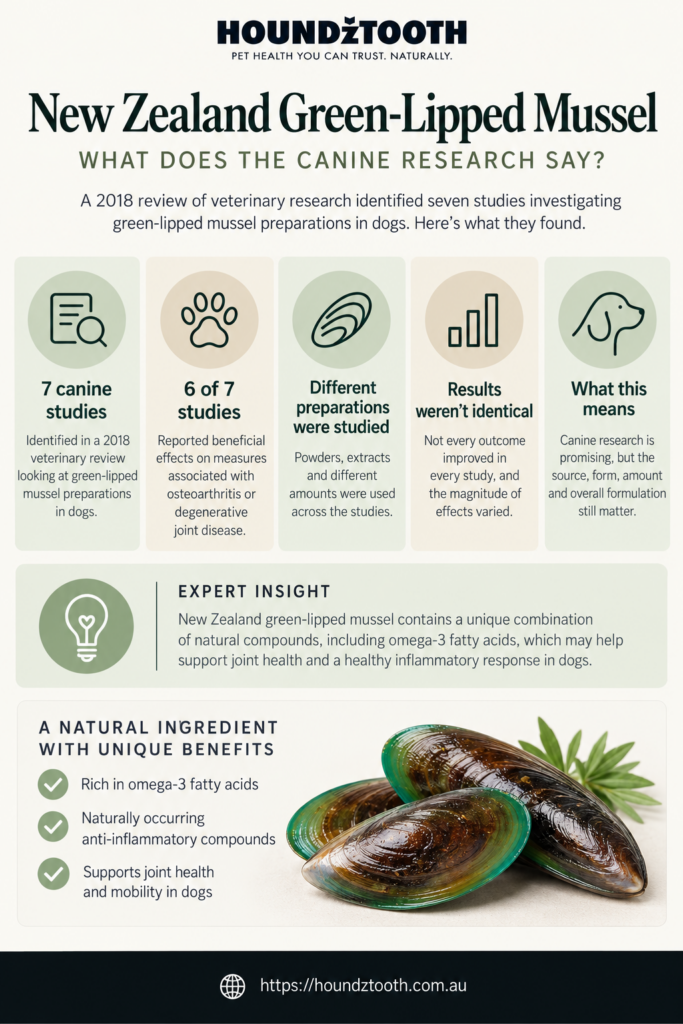
A 2018 review of veterinary research identified seven studies investigating green-lipped mussel preparations in dogs. With one exception, the canine studies reported beneficial effects on measures associated with osteoarthritis, degenerative joint disease or orthopaedic discomfort.
Individual trials have also reported encouraging findings.
A double-blind study involving 31 dogs found improvements in total arthritis scores after six weeks in dogs receiving a diet containing green-lipped mussel compared with the control diet. Improvements were also reported in measures of joint pain and swelling, although not every measure improved.
Another double-blind, placebo-controlled study followed 81 dogs with mild-to-moderate degenerative joint disease. After 56 days, a higher proportion of dogs receiving the green-lipped mussel extract showed improvements in clinical signs compared with placebo.
More recently, a 2024 pilot study involving 32 New Zealand working farm dogs found that a green-lipped mussel extract product increased some measures of peak activity compared with placebo. The researchers described the results as preliminary and suggested further research was warranted.
What does that actually mean for dog owners?
The evidence is promising, although it isn’t as simple as saying every green-lipped mussel supplement will produce the same result.
Studies have used different forms, preparations, amounts and methods of assessing outcomes, which makes direct comparisons difficult. The 2018 veterinary review specifically highlighted this variation.
That distinction is important when evaluating products.
Expert Insight
“When I look at research behind an ingredient, I want to know whether it has actually been studied in dogs, not simply whether there is research on the ingredient generally. New Zealand green-lipped mussel is particularly interesting because we do have canine-specific research. However, the form, amount and overall formulation still matter when you’re comparing supplements”
Rachael Tricarico
Houndztooth Founder & Certified Natural Animal Nutritionist CVIT
Is Green-Lipped Mussel a Source of Omega-3?
Yes, although there’s an important distinction to make.
New Zealand green-lipped mussel naturally provides marine omega-3 fatty acids, including EPA and DHA.
These are different from ALA (alpha-linolenic acid), the omega-3 found in plant sources such as hemp seed oil. Dogs can convert ALA into EPA and DHA, although their ability to do so is limited.
This is why looking at the source and type of omega-3 is more informative than simply choosing a product because the label says “contains omega-3”.
What Should You Look for in a Green-Lipped Mussel Supplement for Dogs?
Not all supplements containing green-lipped mussel are necessarily equivalent.
When comparing products, consider:
- Source: Is the green-lipped mussel clearly identified as New Zealand Perna canaliculus?
- Amount: Does the manufacturer disclose how much green-lipped mussel the product actually contains?
- Form: Is it a powder, oil or extract?
- Processing: How an ingredient is processed can affect its composition.
- Overall formulation: What other ingredients are included, and why are they there?
- Suitability: Is the supplement appropriate for your individual dog’s age, diet and health needs?
If you’re unsure how to assess an ingredient list, read our guide to selecting a high-quality pet supplement.
How Does Green-Lipped Mussel Fit Into a Broader Joint-Health Plan?
No single ingredient should be considered the complete answer to maintaining your dog’s mobility.
Healthy body weight, appropriate regular exercise, maintaining muscle condition, balanced nutrition and veterinary care all contribute to long-term joint health.
New Zealand green-lipped mussel can form part of that broader nutritional approach.
For a more comprehensive look at choosing a joint formula, read our guide:
Read next: Best Joint Supplements for Dogs in Australia: What Should You Look For?
New Zealand Green-Lipped Mussel in Houndztooth Joint & Mobility Products
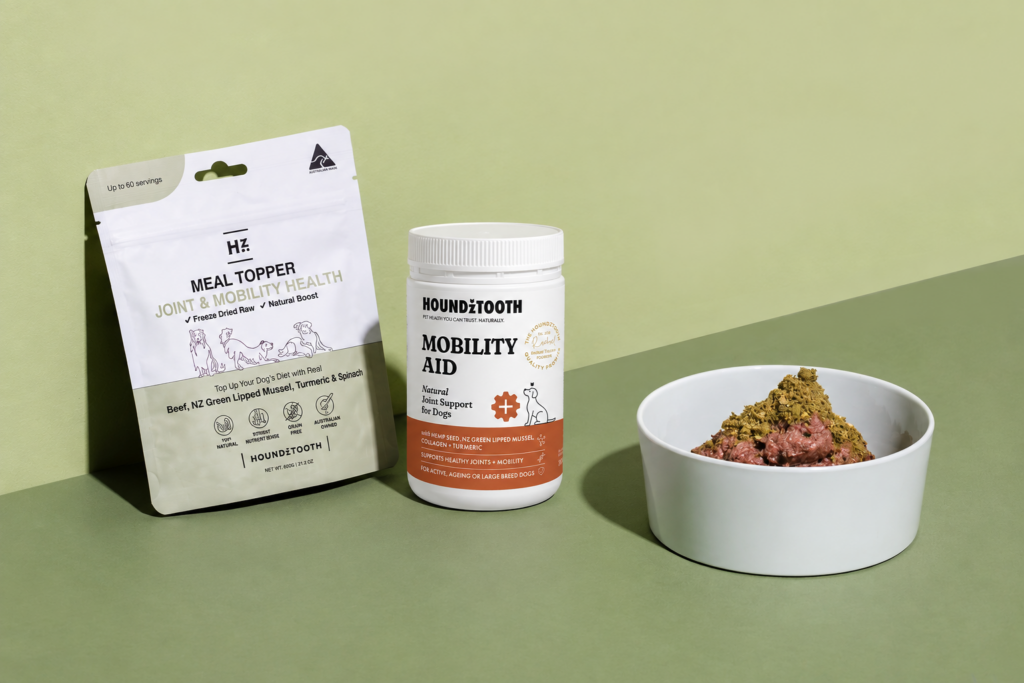
New Zealand green-lipped mussel features across Houndztooth’s approach to nutritional joint and mobility support, including both Mobility Aid and our Joint & Mobility Health Meal Topper.
Houndztooth Mobility Aid combines New Zealand green-lipped mussel with bovine collagen, Australian hemp seed oil and hemp seed powder, turmeric, black pepper, spirulina, vitamin C and magnesium as part of a multi-ingredient formula designed to support healthy joints and everyday mobility.
Our Joint & Mobility Health Meal Topper provides another way to incorporate functional nutrition into your dog’s daily routine. Made from freeze-dried wholefood ingredients, it includes New Zealand green-lipped mussel as part of a food-based approach to supporting joint health and mobility.
Which option is most suitable will depend on your dog, their diet and how you prefer to provide their daily nutritional support.
Frequently Asked Questions
Is green-lipped mussel good for dogs?
Green-lipped mussel contains naturally occurring marine nutrients and has been investigated in several canine studies relating to joint health and mobility. Research is promising, although results vary between studies and different preparations and amounts have been used.
Is green-lipped mussel the same as fish oil?
No. Although both can provide marine omega-3 fatty acids, green-lipped mussel is a whole marine ingredient containing a broader range of naturally occurring nutrients and compounds.
Can senior dogs have green-lipped mussel?
Green-lipped mussel is commonly included in joint supplements designed for adult and senior dogs. Suitability depends on the individual dog, their diet and health, so speak with your veterinarian if your dog has an existing health condition or takes medication.
How long does green-lipped mussel take to work in dogs?
There isn’t one established timeframe that applies to every dog or every product. Canine studies have used different preparations and study periods, with some evaluating outcomes after several weeks of supplementation.
How much green-lipped mussel should I give my dog?
The research doesn’t support applying one universal amount across every green-lipped mussel product because different powders and extracts have been used. Follow the directions for the specific product and speak with your veterinarian if you’re unsure what is appropriate for your dog.
Supporting Your Dog’s Mobility
New Zealand green-lipped mussel is more than simply a popular ingredient on the back of a joint supplement.
It has been investigated in dogs, provides naturally occurring marine nutrients and may form part of a broader nutritional approach to supporting healthy joints and mobility.
The important part is looking beyond the ingredient name. Consider its source, form and amount, the research behind it and how it fits within the complete formulation you’re giving your dog.
Related Articles
Best Joint Supplements for Dogs in Australia: What Should You Look For?
Learn what to consider when comparing joint supplements for dogs, including ingredients, evidence, formulation and your individual dog’s needs.
Read next: Best Joint Supplements for Dogs in Australia: What Should You Look For?
Our Tips on How to Care for Senior Dogs
Learn practical ways to support your dog as they age, including nutrition, exercise, mobility and everyday care.
Read next: Our Tips on How to Care for Senior Dogs
How to Select a High-Quality Pet Supplement
Learn what to look for when comparing pet supplements, from ingredient quality and formulation to research and transparency.
Read next: How to Select a High-Quality Pet Supplement
Do Dog Supplements Work? Here’s Everything You Need to Know
Explore how supplements can fit into your dog’s nutrition and what to consider when choosing targeted nutritional support.
Read next: Do Dog Supplements Work? Here’s Everything You Need to Know